Power and Abuse in the United Farm Workers
Power and Abuse in the United Farm Workers
The alleged sexual violence committed by Cesar Chavez cannot be understood as the failing of a single charismatic leader. It unfolded within a patterned system of organizational control over UFW members.
This article appears in our forthcoming Spring 2026 issue. Subscribe now to receive a copy.
In the mid-1970s, Ana Murgia and Debra Rojas were middle school girls carrying a dark and painful secret: Cesar Chavez, the revered union leader and civil rights hero, was molesting and raping them. Worse still, this abuse was happening in plain sight at the La Paz headquarters of the United Farm Workers (UFW). Tucked away in the isolated Tehachapi Mountains of California, La Paz was home to the main union office and intentional community Chavez hoped to build for the farmworker cause. Countless idealists and organizers congregated there to strategize and implement their grand visions for a more equitable world. But La Paz was also the place where staff, volunteers, and bodyguards caught glimpses of the abuse Chavez was willing to impose on young girls. They were there when Murgia and Rojas walked toward Chavez’s office to spend an inexplicable amount of time alone with him. Some of them were there when Chavez insisted that a young girl ride in his private car, join him on press and fundraising tours, and enter his motel room alone. But seemingly no one questioned or objected to these practices.
Murgia and Rojas carried the painful secret of their abuse for decades, revealing it only to their closest confidants. The girls stayed silent for fear that they, as “nobodies,” would be doubted, maligned, and discredited by Chavez, his cadre of followers, and the countless people who admired him. But in March 2026, the New York Times published their stories. The women’s revelations shocked the world, forcing people to reckon with the fact that a man whose name and image adorned street signs and neighborhood corners had groomed and violated middle school girls.
For decades prior, Chavez and the UFW had occupied a near-sacred place in the American political imagination. They were viewed as the moral vanguard of the farmworker struggle, the last great chapter of the civil rights era, and a powerful story of sacrifice and collective power. The UFW first made history by accomplishing what no other agricultural union had ever managed. They forced some of the country’s most powerful growers to the bargaining table and secured the first labor contracts ever signed in the agricultural industry. The National Labor Relations Act of 1935 had made this endeavor nearly impossible. While the act extended collective bargaining rights to most industries, it explicitly excluded agricultural workers, meaning that employers were not legally required to meet with employees if workers unionized, called a strike, and issued demands. This legal disenfranchisement, coupled with local power structures, growers’ immense lobbying power, government-sponsored guestworker programs, vigilante violence, and systemic racism, made it immensely difficult to organize a successful union campaign. As a result, farm laborers were among the most politically and economically marginalized workers in the country. They often lived in self-constructed houses, pitching tents along ditch banks or settling in colonias, unincorporated land tracts that lacked basic infrastructure, such as water and sewage.
The UFW permanently changed the conditions of farm labor, bringing water and toilets to the fields—basic necessities for workers laboring in over 100-degree weather, with nowhere to relieve themselves but the outdoors. The union also helped ban the short-handled hoe, a small tool used for weeding and thinning crops, which often caused chronic or debilitating spinal problems. The union’s success was thanks to its early ability to organize both Mexican American and Filipino workers, combining the Filipino-led Agricultural Workers Organizing Committee with the Mexican American National Farm Workers Association to form the United Farm Workers Organizing Committee—later known as the United Farm Workers.
While the UFW brought the plight of farmworkers to the national consciousness, it soon grew into more than a union and came to represent the Mexican American civil rights struggle as a whole. What solidified Chavez and the UFW in the American imagination was their ability to transform their labor campaign into a broader social movement built on cross-class, cross-racial, and interfaith coalitions. But that narrative—polished through movement mythmaking, liberal nostalgia, and the union’s own public relations machinery—has obscured a far more complicated and troubled history.
Murgia and Rojas’s story should not have been so surprising. Journalists and scholars like Miriam Pawel, Matt Garcia, and Frank Bardacke have spent years chronicling the darker aspects of the history of the farmworkers movement, revealing that it was plagued by abuses of power. I first encountered this alternative history early in my scholarly career. I was fascinated by the UFW, largely because my own mother had been a farmworker and I had grown up in a farmworking community. In fact, my family members and neighbors labored in the very California grapevines Chavez had organized four decades earlier. Thanks to the UFW, these farmworkers had access to porta-potties and water in their fields, but little else had changed. Many still do not receive overtime pay, health insurance, vacation days, or habitable housing. Given these conditions, it had never occurred to me that farmworkers could be organized. Yet when I encountered this history, I figured that if it had happened once before, it surely could again.
I threw myself into the legacy of the UFW: I read about its history, I made the trip to La Paz, and I interned at the Dolores Huerta Foundation, an advocacy organization led by the former UFW leader. The people and places I encountered recycled the same polished narrative that had shaped the public imagination for decades—a story of humble heroes and uncomplicated virtue, which bore limited resemblance to the complexities I encountered in my own community. My farmworker friends, family, and neighbors were, and remain, the hardest-working people I’ve ever known. They were kind and generous, but they also held racist and conservative views. It was not particularly surprising when they or their children voted for Donald Trump in three presidential elections. As for Chavez, it seemed quite impossible to admire him after reading Pawel, Bardacke, and Garcia’s books.
These experiences led me toward the deeper questions that now shape my scholarship. My work reveals how the Mexican American civil rights movement was built on a popular campaign to exclude Mexican labor migrants. The UFW played an important role in this story, emerging both as a pioneering labor organization and key actor in a grassroots restrictionist campaign that shaped carceral migrant policy. But the union’s public mythology obscured the high-control organizational dynamics that structured daily life in La Paz, and these darker internal machinations expose us to an uncomfortable truth: the recent sexual abuse allegations against Chavez cannot be understood solely as the failings of a single charismatic leader. Rather, they unfolded within a larger, patterned system of organizational control—one that union leaders, staff, and some members widely witnessed and routinely enabled.
This reality is incompatible with our collective memory of the UFW. The union is known for its greatest moments: Filipinos and Mexican Americans breaking bread in Filipino Hall after both groups refused to cross the picket line, Huerta standing on a car holding her famous “Huelga” (“Strike”) sign, humble farmworkers marching to Sacramento with an image of the Virgin of Guadalupe to guide them, the UFW signing the first union contracts with California growers—a feat no other labor organization had managed before. These are the triumphant images that have made their way into our history books, murals, and social media feeds. But the 1970s tell a far different story. This was a decade that featured a union under siege, isolating itself from the workers it purported to represent and slowly devolving into a significantly weakened institution whose public legacy would later be largely maintained by its nonprofit counterpart, the United Farm Workers Foundation.
The febrile atmosphere at La Paz cannot be separated from the precarious legal and political terrain in which farmworkers and their organizers operated. Richard Nixon entered the Oval Office in 1969 after running a law-and-order campaign. The FBI was keeping tabs on the union, and Chavez received multiple death threats. Those realities, alongside California Governor Ronald Reagan’s attack on social programs, as well the public’s exhaustion with the political violence of the 1960s, created a climate of siege and scarcity where centralized authority made sense.
By the 1970s, the union’s anti-migrant policies, combined with administrative missteps, left the UFW increasingly unpopular in the fields. Throughout the 1960s, the union launched a campaign to prevent Mexican green card commuter strikebreakers from entering the United States and working in the vineyards. In an attempt to stop these labor migrants, the union organized a march to the border, conducted two international picket lines, testified before Congress against commuters, and even inspired a demand in the 1968 Poor People’s Campaign, which led to a deportation operation in Delano. When the UFW won its historic contracts in 1970, it did so largely due to its consumer boycott, not through worker support. Once in power, the UFW mismanaged the union halls and routinely favored U.S.-based workers over Mexican residents.
Moreover, when the union’s grape contracts expired in 1973, growers signed contracts with the competing Teamsters, spurring a protracted and deadly conflict as they fought for union votes. The UFW would eventually suffer a devastating loss on their own home field in Delano in 1975, when farmworkers elected the Teamsters in nineteen elections while the UFW prevailed in only eight.
The defeats ushered in a new chapter in the UFW’s history, in which the union became a tightly managed hierarchy. Its failed attempts in 1976 to pass Proposition 14 in California sealed this fate. If ratified, the law would have allowed union organizers to enter private grower property to campaign for elections and restored funding for the Agricultural Labor Relations Board, which could conduct hearings and issue determinations. Chavez siphoned money and manpower into the referendum, but the campaign was a dismal failure. Growers launched a well-funded media blitz against the proposition, convincing the public that it violated the sacred right of private property. If union organizers could enter grower fields at will, what was to stop them—or the government, for that matter—from entering private citizens’ homes next? California voters ultimately rejected the measure.
Chavez’s unilateral decision-making and controlling behavior predated the 1970s, but after the union’s defeat in Delano and the demise of Proposition 14, his abuse of power reached new levels. The union’s major setbacks prompted staff members to question the leadership’s strategy. By diverting the union’s resources to electoral politics, Chavez and the executive board had neglected the farm workers in the field. Organizers feared the union would lose whatever influence it still had in the fields if they did not bring the fight to the farmworkers. Yet instead of meaningfully engaging with this critique, Chavez began to interpret it as an act of insubordination. He accused national boycott director and his former bodyguard, Nick Jones, of orchestrating a communist conspiracy against the union. Chavez claimed that Jones and a cadre of co-conspirators had sabotaged the Proposition 14 campaign so they could oust him and advance their own positions in the union. After Jones and his wife resigned under pressure, Chavez began to purge the staff of suspected traitors. These sudden and largely unexplained dismissals elicited protests among some union workers, but the UFW leadership quickly closed ranks around Chavez, interrogating supposed saboteurs and ambushing them with accusations.
The UFW’s authoritarian impulses only intensified after the Prop 14 purge. Staff members and leadership continued to blame each other for the union’s string of failures. After visiting a compound of Synanon—a former drug rehabilitation program turned intentional community—Chavez announced that he had learned about a valuable team-building exercise there called “the Game.” Unbeknownst to them, Synanon was then devolving into a violent cult. By the end of the 1970s, Synanon victims would accuse the organization of beating its members and forcing them to undergo vasectomies and abortion procedures. But at the beginning of the decade, it still seemed like a tight-knit alternative community that possessed an enviable cohesiveness, which the UFW sorely desired. So staff members fatefully agreed to play the Game.
In practice, this strategy only hardened the union’s toxic internal politics. During the Game, participants were supposed to acknowledge personal shortcomings, confront traumas, and take responsibility for their life choices. But the mechanism used to induce those revelations was abusive. Players sat in a circle while one person spoke about their problems, and the rest of the group mocked, shouted, and attacked them until they broke down and confessed. In the UFW context, the Game was supposed to streamline union operations by quickly resolving interpersonal conflicts, forcing staff members to own the mistakes inevitably made during a labor campaign. But what happened in the halls of La Paz was not organizational responsibility. The Game was routine psychological and emotional abuse; staff members were frequently reduced to tears.
As it did in Synanon, the Game devolved into a technology of control at La Paz. It disciplined subjectivity, normalized collective conformity, and manufactured consensus around Chavez. Under his discerning gaze, community members demeaned one another around the circle, and these dynamics quickly produced a culture of mutual surveillance. In one instance, a group of staff members even circulated a petition asking Chavez “to act immediately to remove from La Paz those who spread discord and unhappiness.” This successful effort to expel internal dissidents occurred after a few people complained about a new community policy, which dictated that any mail not labeled “personal” could be opened and read by staff without the recipient’s permission.
As the union became increasingly isolated and paranoia flourished within their ranks, Chavez’s sense of grandeur only grew. In the 1970s, he began claiming he could heal ulcers and perform bloodless surgeries using mind control. For many of his followers, this seemed quite possible given that Chavez’s mother had been a curandera, a Mexican folk healer. Curanderismo was a common feature in Mexican communities, and its practitioners were known to treat illness through holistic healing methods like prayers, herbal remedies, limpias (energy cleansings), and massages. When Chavez blended his interest in New Age thinking with his family heritage, he came away believing he, too, had a gift for healing. His staff and followers in La Paz believed it as well. After all, this was a man who had the internal strength to endure two fasts that lasted over three weeks. Chavez took advantage of this ancestral practice to molest Ana Murgia when she was only thirteen years old, claiming that he was going to show her body’s “pressure points.”
Set against the broader practices that unfolded in La Paz, is it really so surprising that Chavez took his long and well-documented list of abuses one step further? In the seclusion of the Tehachapi Mountains, he had the power to read people’s mail, force them out of their housing, remove them from their jobs, psychologically torment them, and heal their physical ailments. Together, these practices established a brutal organizational logic. Shame, ritualized humiliation, and the sacralization of loyalty functioned as disciplinary tools that converted disagreement into moral failure. What emerged was a feedback loop where isolation bred paranoia, paranoia justified tighter control, and tighter control normalized abuses that would otherwise have been intolerable.
Parceling out responsibility within a cult-like system is an inherently fraught endeavor, as survivors often inhabit the role of both victim and perpetrator. Still, we would be remiss to cast Chavez as the lone abusive mastermind without confronting the organizational culture that enabled, protected, and reproduced his behavior. The tragedy of the UFW is that its leaders, workers, and some members did not merely tolerate this culture; they actively sustained the cult of personality that made Chavez’s abuse possible.
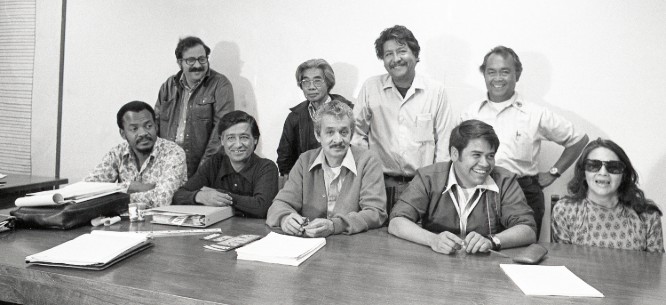
The UFW executive board of the 1970s—consisting of Dolores Huerta, Gilbert Padilla, Richard Chavez, Marshall Ganz, and Eliseo Medina—routinely quelled internal dissent by weaponizing the cause’s moral authority. They cast any critique or question as a betrayal of the farmworker struggle itself—never mind the uncomfortable fact that campesinos had little say in the union’s executive decisions. At best, those who acquired a distaste for Chavez’s authoritarianism looked on with consternation and eventually left, issuing private apologies and only speaking of the climate of fear and control decades later when historians arrived at their door.
Huerta remains a tragic example of these moral entanglements. When New York Times reporters approached the UFW co-founder with Murgia and Rojas’s allegations, the ninety-five-year-old activist revealed a secret of her own: Chavez had assaulted her as well, resulting in two separate pregnancies. Huerta was a fierce and early organizer who devoted her life to the farmworker cause, but she was also a leading figure in the UFW’s disciplinary campaigns. Huerta had been one of the earliest proponents of the Game; she led a public charge against farmworker Chava Bustamante after he opposed a union measure that would have made contributing to the union’s political fund compulsory for workers. She repudiated the union’s paralegals when they asked for a living wage and medical benefits, claiming “You guys are from middle-class backgrounds. . . . Who are you to ask? This is money from the union, from the blood of the workers, and you want it for yourselves.”
The line between protector and persecutor was blurred for leaders like Huerta, who were often forced to navigate loyalty, fear, and political calculation. Huerta was operating within a heavily machista culture in which Chavez publicly humiliated women—including her—by calling them “bitches” and “assholes.” Chavez and his bodyguards forced community members off the union grounds, taking away their jobs and homes, simply for critiquing the UFW president. What might they have done to a woman who brought weightier charges against the famed civil rights leader? It’s possible that Huerta believed that the best way to protect herself was to appease Chavez, since he could easily have turned the union’s authoritarian machinery against her. Ultimately, Huerta and at least two young girls became victims of the cult of personality she and countless others had helped to uphold.
The mistakes of the UFW are obvious in hindsight, but what made them so dangerous was that many seemed quite imperative at the time. Immigration laws enabled growers to transport Mexican strikebreakers across the border, while economic constraints and local power structures made it difficult to organize Mexican residents, so the UFW turned against them. The consumer boycott was a powerful tool that ultimately broke the growers and sent them to the bargaining table, but it also tied farmworkers’ fate to public opinion. The UFW had to convince consumers that the farm worker movement deserved their support, so it constructed an effective public relations machinery that spurred the boycott, strengthened the organization’s moral authority, and exported Chavez’s cult of personality to the public.
The political economy of the 1970s and 1980s, moreover, placed immense strain on the union. Growers and their large retinue of lawyers tied up the UFW in litigation. The industry’s immense cash funds helped defeat it at the polls. State institutions often intervened on the growers’ behalf. By the 1980s, the industry also began to reorganize its labor operations, making it increasingly difficult for the UFW to obtain and keep contracts. The union responded to this external pressure by purging leftists and dissenters from its ranks and treating its own workers poorly. Though loyalty, discipline, and sacrifice were necessary in an increasingly hostile political environment, the UFW’s abusive mechanisms for ensuring this devotion were toxic and authoritarian, causing the union to lose talented staff, volunteers, and lawyers when it needed them most. The UFW ultimately imploded under the pressure, and young women and girls were hurt in the process.
Who bears responsibility? The answer is easy for some and far more complicated for others. But the harder question lies in accountability. Chavez is dead. Many former leaders spoke to journalists and historians years ago, acknowledging some of their wrongdoings. Beyond them, the UFW has always been, and will always be, more than Chavez and its leadership. Countless men, women, and children gave to the cause without knowing what was happening in the Tehachapi Mountains. How do we honor their dedication while acknowledging the abuses that happened in the name of La Causa?
The stories of Ana Murgia and Debra Rojas reveal how power can replicate itself even inside organizations committed to justice. Neither our commitment to liberatory politics nor our class position and identities render us immune to perpetrating harm. Structure, discipline, and sustained commitment are indispensable for any struggle against entrenched power, but they can also create conditions in which organization and moral authority become insulated from scrutiny. As the Trump administration cracks down on protesters and community organizations, it is important to remain grounded in our movement’s values. Organizers and volunteers should insist on democratic governing structures, transparent decision-making, rotating leadership, and independent grievance procedures.
The history of the UFW presents a valuable warning: center but don’t sacralize the vulnerable, reckon with the ever-present manifestations of power, and choose compassion as the organizing principle of our movements.
Nahomi Linda Esquivel is a postdoctoral fellow at the Johns Hopkins SNF Agora Institute and an incoming associate professor of history at Hamilton College. She is a former labor and community organizer.