Abolitionist Feminism
Abolitionist Feminism
An interview with Kathi Weeks.
With her 2011 book The Problem with Work, political theorist Kathi Weeks helped kickstart a theoretical renaissance of work-critical socialist feminism. Now she’s back with a new volume blending that critique of labor with prison and family abolitionism.
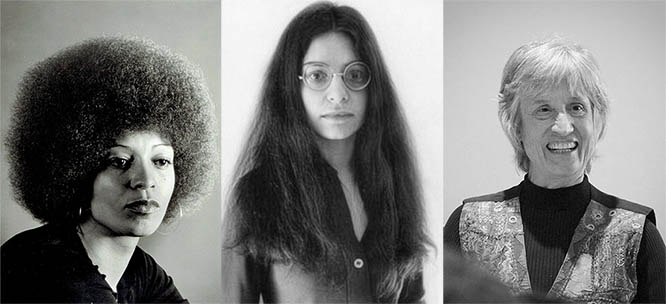
Weeks takes the work of Shulamith Firestone, Donna Haraway, and Angela Davis as her starting point for a consideration of what it means to be an abolitionist today. Abolition Archives, Feminist Futures is an argument for the importance of Marxist feminism, and a call for structural thinking and collective action in the face of so much pressure to think and act on an individual scale. It may seem impossible to dream of massive transformation in the midst of day-to-day battles to survive, but Weeks makes a compelling case that we need such dreams even in the middle of crisis, to help us find a way out.
I spoke with Weeks about her new book, the transformations of capitalist life over recent decades, and why it is necessary for Marxists to be feminists.
Sarah Jaffe: Back in 2016, I saw you give a talk on “abolitionist feminisms,” and specifically the work of Angela Davis, at a conference titled “Seizing the Means of Reproduction,” so I was so excited to see this new book. You write that this is a project of reviving and reinventing the project of U.S. Marxist feminism. What is U.S. Marxist feminism?
Kathi Weeks: It’s been understood very narrowly. Often the story gets told as, “Socialist feminists were interested in trying to think about the relationship between patriarchy and capitalism. They came up with a dual systems model, where capitalism is operative in the economy and patriarchy is operative in the household. That was a way to think about how the economy and households are linked through different forms of labor: some of it so-called productive labor in the economy, some of it unwaged reproductive labor in households.” This dual systems model never got worked out, and then it was a dead end.
What I’m trying to do with this book is broaden the archive. If you go back to 1970s feminism—the heyday of Marxist and socialist feminism in the United States—the borders between different kinds of feminisms, particularly radical and Marxist feminisms, were more blurry than we remember. There was much more interchange and a broader investment in anti-capitalism.
I picked three texts or sets of texts that are often not fully understood as Marxist feminist texts: Shulamith Firestone’s The Dialectic of Sex (1970), which is usually remembered as a radical feminist text; Donna Haraway’s “A Cyborg Manifesto” (1985), which is understood to be a post-structuralist critique of socialist feminism; and Angela Davis’s prison abolitionist writing from 1971 to the present.
Jaffe: What leads to these intense gatekeeping exercises among Marxists?
Weeks: You get fights over the foundational texts: it’s like constitutional originalism. But Marxist feminists recognize Marxism as a method that you have to expand if you want to talk about things that Marx himself, for various reasons, did not talk about.
Jaffe: In the book, you say that Angela Davis is a methodologist, first and foremost. Her pedagogy is focused less on what to think than on how to think. I could also say this of your book: it feels like a rigorous and generous meditation on how to think about politics now.
Weeks: Partly this is a lesson in how to read texts to generate other kinds of readings. But mostly what I’m interested in is trying to make a case for feminists to think structurally about these major institutions of work, family, and prison. That is the ongoing polemic throughout the book.
It’s shocking how unschooled we are in thinking at the level of social structures. We’re trained to think at the level of individuals. If we’re going to think about work, we’ll think about this job or that job—is it a good boss or a bad boss?—rather than thinking about waged work as a system of income distribution. But if we look at it that way, we’re going to ask different kinds of questions about how well it functions to distribute income, and what kinds of hierarchies it creates. The level of the individual interferes with that.
It’s the same with families: it’s hard for people to think about the family structurally rather than to think, “I love my family,” or “that family over there seems dysfunctional.” But the family is also a set of structures and ideologies that recruit us into households. It’s there that most of the reproductive work that’s necessary for workers to show up to work each day, which the economy depends on, gets divided up and then hidden.
This is what the concept of structural racism is also designed to articulate: that racism is not necessarily about individual discriminatory attitudes; in many cases, it gets embedded in these routines that are non-intentional. I’m trying to make a case for thinking on this scale of structures, because individuals or groups of individuals are not the authors of them. Structures develop over time and they’re going to be dismantled over time. The timeline of political change has to be expanded.
Another question that I often hear posed at the level of the individual is, “What can I do about it?” I always say, “As an individual, absolutely nothing.” It requires collective action over time which is longer than biographical time.
Jaffe: That almost makes it easier—you don’t have to divorce your family right now to be on board with the politics of superseding the family.
But there is still a tendency toward individualizing that often seems to go hand in hand with a romanticized view of the three institutions that you’re critiquing here. The family? Workers love their family! The prison? Well, workers are worried about crime! Work? Workers want to work! It feels to me like there’s an affective investment that gets displaced onto “the workers” that misses precisely what we’re asking people to do when we ask them to think structurally, which is to say: it’s not about your feelings.
Weeks: I use various shorthands to try to get at this. One is to think about politics and ethics as different kinds of endeavors. Ethics is always tethered, to some degree, to individual decision-making. But politics is about collective action over longer periods of time.
That language of what workers “want” is based on a very narrow understanding of what a worker is, as if a worker doesn’t have a gender identity or a racialized identity, and is not committed to other kinds of politics, all at the same time. “Worker” also becomes a class identity rather than a structural position. And then you want to save that identity and cater to it.
Jaffe: You want to valorize that identity.
Weeks: Let’s be clear: politically, it does not matter if an individual changes their life. Collectively, it might, but we’re constituted as subjects within these structures. To tell us that we should reconstitute ourselves seems a hard road to follow. What’s kinder is to say: We are who we are. What we want to do is to change the rules of the game so that we can become otherwise over time. It’s about embracing the politics that would destroy you as a subject.
Jaffe: Which is hard to do! In the book you describe how Firestone understands the commitment to the long game that family abolition requires. You write that, “even if we might be among the agents that help to bring that different future into being, we will not be, and perhaps could not be, the subjects fully desirous of that world.” Just to want that transformation makes you feel like you come from the future, which is an alienating experience.
Weeks: You can use your own experience about whether the family was good or bad for you. But if you look at statistics on violence in families, they suggest there’s something wrong. Look also at how impossible it is to produce enough income to live together as a household and raise children or take care of the elderly—and what a crisis of care we’re living through. I don’t think it’s really that hard to get people to think critically about that.
The term abolition worries people because it’s not just saying, “We need to reform and provide services for those who are beaten and tortured in their families.” That’s just not enough. We need to think much more radically about alternatives to this model, and other ways of organizing intimacy and care and reproductive labor that are not so punishing.
Jaffe: One argument against abolishing the family is gay marriage. But we’re also in the middle of a really aggressive backlash to gay marriage and to non-reproductivity.
Weeks: That far-right backlash reveals the power of the gendered division of labor that the family ideal protects, individualizes, and offloads onto women. It’s important for every other institution that the far right cares about.
Jaffe: Early on in the book, you mention the idea that political theory should be about the state. The family, the prison, and the workplace are shaped and reproduced by the state, but somehow it’s common to think that they are separate or inevitable.
Weeks: These institutions are relations of rule. As soon as you walk into a workplace, you are being governed intensively and without many limits. Obviously the whole idea of the prison is you’re subject to dictatorial power. And the family is also a management regime for assigning roles, and deciding who does what kind of work. But because they’re privatized, we don’t recognize them as forms of governance.
Jaffe: They govern us even when we’re not in them.
Weeks: That’s part of that structural imagination—to think about how your world is profoundly shaped, even if you are not inside these institutions. I’m not in a prison, I’m not in a nuclear family, but all of my choices, and public policies, are made with these normative models in mind.
The family is a machine for the privatization of care. It’s just extraordinary that caring for ourselves, our children, the elderly, others, is something that we’re supposed to do in the confines of our household in a few moments after waged work. Why is that even a remotely reasonable way to organize an economy?
Jaffe: Does this connect to the criticism of dual systems theories? In your section on Haraway, you show her trying to come up with a unified theory, rather than one which allows people—not all of them men—to pretend that the home is not an interesting or relevant sphere of inquiry.
Weeks: I think I had a footnote that this is a polemic against the class-first left, but since the class-first left doesn’t read feminist theory, none of them will ever know.
In this moment in 1985, I see Haraway as rewriting the Communist Manifesto. She was trying to rewrite socialist feminist dual systems theory, and imagine capitalism and patriarchy as an integrated circuit within global post-Fordism.
I don’t believe you can be a non-feminist Marxist if you want to think about capitalism today, because you have to understand how gender and a patriarchal system are intertwined to shape who workers are, and how different kinds of systems produce different kinds of workers and different kinds of ideological cover. If you want to talk about how to organize politically, you have to talk about capitalism as it intersects with systems of racial hierarchy and gender hierarchy and settler colonialism and the rest of it. That’s what I’m getting from Haraway and then trying to update.
Jaffe: In the age of platform capitalism, everything Haraway wrote about has escalated. I’ve been thinking of Trumpism and the rise of the far right as an emotional rebellion against the age of the feminized worker. Men resent the idea that they have to work like women now.
Weeks: The feminized worker in some of the 1980s socialist feminist literature was the textiles factory worker who was supposedly docile and dexterous. Now we’re talking about service-sector-dominated work—and the emotionally attuned, willingly precarious worker that has become the ideal. The docile, dexterous worker was already anathema to those who embraced the model of a masculinized breadwinner; the service worker is probably even more terrifying.
Even at the height of love-your-work and happiness at work discourse, bosses knew that you weren’t going to last in your job. You also had to embrace precarity: don’t love the boss, don’t love the organization; love your own feeling of being productive.
Jaffe: You have to work on yourself to be the ideal worker, you also have to work on yourself to be a lovable person. The pressure is to optimize in both work and romantic relations. These things prioritize the individual.
Toward the end of the section on the family, you bring up non-monogamy, and my note was basically “Polyamory: neoliberal optimization or genuine challenge to the family?” But obviously it’s both. There is a way that it becomes just more optimization: now you have five different partners and each one of them meets a different need.
Weeks: I think the radical critique of the family has been too easily sidelined by saying, “We already have these reforms that have remade the family.” I don’t think that’s true. Queer marriage is vitally important because marriage is attached to certain cultural meanings and economic and social privileges. But does it change the institution? No. It’s still a privatized system of social reproduction.
All these experiments in non-monogamy actually do have a lot more potential to disrupt the couple form. But even so, it easily gets contained. I felt a little bit bad about critiquing what I do think is an interesting set of practices that’s generating different ways of thinking about care and intimacy.
It’s like imagining what a gender abolitionist future would look like: Would it be that the sex category we put bodies into would have no bearing, and we wouldn’t expect any kind of gendering of any bodies? Or is it a gender-full future, where there are so many different enactments of gender that it is untied from sexual dimorphism, or any kind of model of heterosexual versus homosexual?
The same kind of questions can be asked of the family: Would the privatized model of social cooperation fall away, and we would have another way of doing it? Or would there be so many possibilities for household formation that there would be no family?
Jaffe: I want to go back to the question of work, and the challenge of imagining what is not work. In writing about grief, I was insistent that grief is not work. I read an essay about the middle voice, which is somewhere between active and passive. Most modern European languages don’t have this category, so it seems almost impossible to imagine something that isn’t active: if it’s valuable, it’s work; if it’s effortful in any way, it’s work.
Weeks: I think we avoid the radical critique of work by saying, “this would be better work, or this is really not work.” You could say, “I don’t want to spend all of my time at work, I want to spend time with family,” as if family is not also a worksite. When we think about non-work, I think we too easily imagine doing things as intensively and oriented toward goals as we do in work. Is that an imagination of non-work? I don’t know.
All I’m trying to do is rain on people’s parade. What you think is outside of work is still within its logics and ethics.
Jaffe: I was talking with a friend about some of these studies on basic income, and how most studies find that people keep working even with basic income. One study found that people worked around 1.5 fewer hours a week. But isn’t the point of it for people to work less?
Weeks: As if the economy really needs all these workers, when it can’t even provide enough jobs for all of them. That’s the difference between the individualist unit of analysis and the system: this person might not be employed, or maybe that unemployed person will able to get a job, but not all unemployed people will be able to get jobs. We don’t need and cannot accommodate all of these workers.
Jaffe: That actually brings me quite perfectly to the lumpenproletariat, because you have this wonderful examination of the concept. It made me think of Phil Jones’s book Work Without the Worker, about the distribution of microwork across the world, the gig worker, and the fragmented workplace. And AI is doing that even more.
Weeks: AI is gathering up things that people have created in order to sell it back.
In the book, I am trying to think about the lumpenproletariat in order to imagine who would coalesce around an agenda critiquing prison, family, and work. Anti-prison activists and radical sex work theorists and day laborers and domestic workers and welfare rights activists have taken aim at these institutions, but they have been sidelined.
Historically, there is a contrast drawn between the upstanding proletariat who are loyal and committed and disciplined, and then the lumpenproletariat who aren’t, in part because they aren’t disciplined by the wage. I’m trying to link that to gig workers today. They are workers, but they’re so precarious and so incompletely remunerated that they’re at the fringes, and they’re not being disciplined by the wage relation in the way that the classic worker is. The term lumpenproletariat is a term from history. I am not saying we should use it. But it is a way to get at these other kinds of workers, who have often been marginalized in workers’ politics, who have always been active and innovating ways to fight back.
Jaffe: “Archives” is in the title of the book. I would love for you to talk a little bit about what you’re thinking of as the archive.
Weeks: I’m very invested in this thing called Marxist feminism—and people often say, what does that even mean? I’m trying to figure out how you can think about Marxist feminism in ways that don’t make you beholden to the past, or to some kind of orthodoxy. What does it mean to be part of an intellectual and political project over time? How do you narrate that in a way that’s going to stave off those relationships of gatekeeping and defensiveness?
I like the term archive and the way that it traveled in the 1990s across different academic disciplines, and because it’s an alternative to the “canon.” So I’m putting my texts by Shulamith Firestone, Angela Davis, and Donna Haraway in an archive. That means I want to read them together. I am not saying that means they constitute a canon. I’m not saying that they’re more worthy than others. It changes how you read texts when you put them together, and I find that really generative.
Jaffe: The other term that came to mind was “comrade.” It made me think, what does it mean to choose comrades from history as well as from the present?
Weeks: That feels generative too, doesn’t it? You’re also foregrounding your own affinities as part of the selection criteria. “Because they’re my comrades.” There’s a relationship of intimacy or closeness or affinity that I’m trying to narrate.
Can you claim to be a comrade of someone who may not even have liked you? I don’t know if there has to be kind of a mutuality. Can I claim to be a comrade to someone who probably wouldn’t say the same thing about me?
Jaffe: Today’s far right is obsessed with the very things that you are calling to abolish. We have a massive expansion of prisons in the form of ICE detention, and an obsession with white birth rates and pronatalist policies. They want everyone to go to work, but at the same time, they’re dismantling work as we know it. What do systems thinking and long horizons teach us about fighting on the ground now, and what should we keep in mind as we’re trying to help our neighbors get through the day?
Weeks: Angela Davis, among others, has always been really good about refusing a distinction between reform and revolution. It’s both/and: reforms that don’t become just reformist, and little fights that always keep on the horizon a larger goal. That’s hard: in Minnesota, they must be exhausted and I don’t mean that you can fight at that intensity every day.
It’s important not to feel completely defeated when you lose a particular battle, because there are going to be many battles. It’s important to put politics on a longer timeframe and still take pleasure in being part of it.
There’s always this pragmatic assumption: “If we lose, people will go home and be disappointed.” How do we narrate what it means to commit to fights that won’t be won in our generation? We don’t have the vocabulary to explain what that means.
Kathi Weeks is Professor of Gender, Sexuality, and Feminist Studies at Duke University and the author of The Problem with Work, Constituting Feminist Subjects, and Abolition Archives, Feminist Futures.
Sarah Jaffe is a member of Dissent’s editorial board and the author of From The Ashes, Work Won’t Love You Back, and Necessary Trouble.