A Crisis of Conflict Resolution, Not Conflict Studies
A Crisis of Conflict Resolution, Not Conflict Studies
A response to “The Demise of Conflict Studies” from our winter issue, followed by a reply by the authors.
The following is a response to “The Demise of Conflict Studies” from our winter issue, followed by a reply by Wolfram Lacher and Yvan Guichaoua.
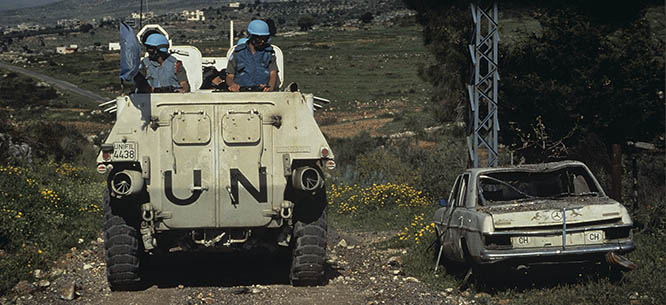
Looking at the conflicts mentioned in “The Demise of Conflict Studies”—Ethiopia’s Tigray, Sudan, and Gaza—Wolfram Lacher and Yvan Guichaoua are right to conclude that “a world in which Western scholars studied wars in faraway places, and Western states intervened in those same wars,” is obsolete, or at least it should be. However, the article conflates conflict studies everywhere and paints too grim a picture of all conflict studies scholars.
I call the authors of the article to rethink three fundamental assumptions they have made. First, they should not confuse crises of conflict resolution with a crisis of conflict studies. While there is overlap to a certain extent, the moral failures in the practice are not shared with the field of study. Conflict studies in its current form is vast, multidisciplinary, and diverse. The field cannot simply be reduced to Mary Kaldor, Paul Collier, and Anke Hoeffler—who, with all their limitations, have called us to interrogate important issues in conflict studies that would otherwise remain veiled. Various scholars from all over the world have contributed fundamental theoretical insights, served as a voice for groups in spaces of conflict despite facing risks, and have advocated for novel and participatory methods of conflict analysis.
Second, conflict studies, despite its origins, has come a long way. Many scientific fields of studies have roots in racist, misogynist, and imperialist assumptions. That might be true for certain conflict studies in certain institutions. But as a global agenda, the field is shaped by different empirical and cultural perspectives around the world. This requires continued self-evaluation and reformation of methods and objectives. There have been calls to decolonize approaches to conflict studies through intersectional perspectives and indigenous knowledge. Not all, but many scholars in the field have heeded that call.
Finally, the authors of the article seem to criticize the Western colonial approach (though not as explicitly as they should), but they continue to perpetuate it through their analysis. Throughout the article they imply that the aim of conflict studies is to inform Western foreign policy. This is where their hyperbolic conclusion that the jobs, the funding, and policy space are shrinking comes from. This might be true for some countries in the world. But institutions like the Institute for Peace and Security Studies (IPSS) of Addis Ababa University prove this statement wrong. While the IPSS is an institution that goes beyond conflict studies, it draws from the field’s analysis, contributes to it, and even shapes its relevance in the region in many ways.
There is ample evidence that at a time when Western funding is dwindling, conflict studies in its decolonial and interdisciplinary form continues to thrive, and the demand for its experts to rise. There are many such institutions in Africa, Europe, and other parts of the world that continue to be relevant. The call to be interdisciplinary, innovative, and grounded in reflexive research ethics that empower conflict-affected communities continues. I am certain that many in the field will heed this call today (as they have in the past) and work toward a stronger future for the scholarship.
Mercy Fekadu Mulugeta is an associate professor at Addis Ababa University. She is the director of the university’s Institute for Peace and Security Studies and of the ARUA Centre of Excellence in Post-Conflict Societies.
Reply from Wolfram Lacher and Yvan Guichaoua
We thank Mercy Fekadu Mulugeta for her thoughtful response to our essay. We agree that conflict studies is a vast, multidisciplinary, and diverse field. We do not reduce it to Kaldor, Collier, and Hoeffler. If we emphasize their contributions, it is because they—for better or worse—shaped the field as a whole, both by influencing the field’s mainstream and by provoking numerous critiques and the development of alternative approaches. We accept that ours is a Western-centric perspective on the field. Our critique of conflict studies as an essentially Western social science discipline is not a perpetuation of “the Western colonial approach.” Rather, it recognizes persistent hierarchies in knowledge production in the social sciences in general, and conflict studies in particular.
Despite the welcomed emergence of alternative (feminist, intersectional, non-Western) approaches and some more or less genuine efforts at decolonizing the field, academic institutions in the West continue to overwhelmingly dominate it, as measured by criteria such as academic positions, research funding, or publications in leading journals and at prestigious university presses. The conclusion that jobs, funding, and policy space in the West are shrinking therefore has implications for the field as a whole. Let us hope that conflict studies elsewhere continues to thrive, and the demand for its expertise to increase: this would act as a major corrective for the field as well as its prevailing biases and hierarchies.
Wolfram Lacher is a senior associate at the German Institute for International and Security Affairs (SWP) in Berlin and the author of Libya’s Fragmentation: Structure and Process in Violent Conflict.
Yvan Guichaoua is a senior researcher at the Bonn International Centre for Conflict Studies. He is currently co-director of the research program GovJihad, which investigates how transnational jihadist groups establish governance systems in Africa.