The People vs. Laura Kipnis
“Sledgehammering feminine shame and smearing menstrual blood all over its covenants” isn’t a perfect description of what Kipnis has done with her writing, but it comes close.
“Sledgehammering feminine shame and smearing menstrual blood all over its covenants” isn’t a perfect description of what Kipnis has done with her writing, but it comes close.

The problems of Brooklyn’s gentrifying neighborhoods won’t be solved by a housing-market version of “ethical consumption.” It’s going to take collective action. And a new tenant movement is leading the way.

What does the decline of stable working-class jobs mean for the working-class family? Belabored asks Andrew Cherlin, author of a new book, Labor’s Love Lost, on the rise and fall of the nuclear family in America, and how the workplace shapes our family life.

In 2011, Tawakkol Karman helped lead the overthrow of dictator Ali Abdullah Saleh—and kickstart a broader struggle for women’s rights. But today, as Houthi rebels threaten to take control, Yemen’s women activists fear their struggle is being sidelined.

As admirable as de Blasio’s early achievements have been, they have only begun to address the massive problems the majority of New Yorkers face: poverty, unemployment, low wages, exorbitant housing costs, educational failure, and the disproportionate harassment of young men of color.

As “urban renewal” threatens to further marginalize the city’s poor, Marseille activists are demonstrating that genuine cultural, environmental, and social renewal can go hand in hand.

With a massive military, political, and media apparatus already doing a fine job turning Islamists into enemies— and corpses—why should the left join the “ideological wars”? A debate.

Most leftists have no difficulty opposing Hindu nationalists, zealous Buddhist monks, and the messianic Zionists of the settler movement. Why won’t they take a firm stance against Islamists?

Facing the threat of bankruptcy, the city of Reading, Pennsylvania is resisting Detroit-like austerity—and instead nurturing worker co-ops along with other “solidarity economy” approaches designed to make businesses, finance, and utilities more democratic.

Belabored talked to historian Joshua Freeman about how police and their unions fit within the labor movement, and the political contradictions of uniformed officers getting organized.

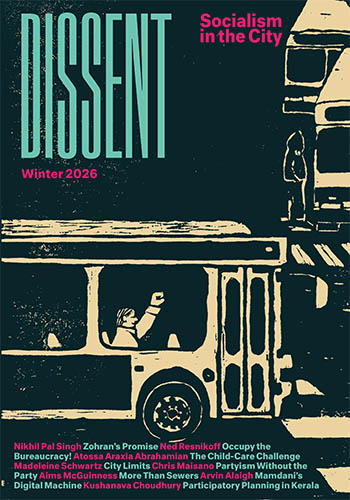
To dwell solely on the grim events in Washington is to neglect the more complicated and, potentially, more hopeful reality taking shape in American cities today.
Introducing our Winter issue.

How U.S. policy, ancestral wounds, and international law have led to an era of ocean imperialism

Why don’t popular economic ideas become policy?

Lane Kenworthy delivers a crisp manifesto for an “American” version of social democracy. But can his vision transcend Republican extremism, union decline, and our country’s racial heterogeneity?

As gross human rights violations against the country’s ethnic groups continue, can peace and democracy really take hold?