Is There Such a Thing as the American Ghetto?
Today, the term “ghetto” comes across as at best anachronistic, at worst offensive. Does it still have any value?
Today, the term “ghetto” comes across as at best anachronistic, at worst offensive. Does it still have any value?

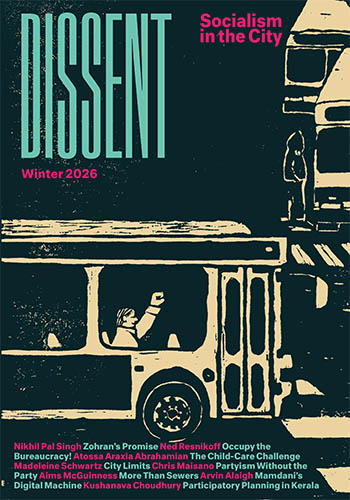
To access Dissent’s full Winter issue, please click here. This page is a placeholder.

From Dolly Parton to J.D. Vance, rags-to-riches stories obscure as much as they inspire, reinforcing the notion that poverty can be solved by dreams and gumption.

Somewhere between the apostles and Joel Osteen, mainstream Christianity turned from a wellspring of egalitarian promise into yet another exponent of the market gospel. Two new books chart where things went wrong.

Why did the ACA—the first substantial expansion of the U.S. welfare state in nearly half a century—fail to win over the constituency it deserved?

Two new histories show how the CIO of the 1930s and ’40s led the charge for racial equality not just on the shop floor but at the national level, precipitating the Democratic Party’s embrace of civil rights.

Oliver Stone’s Hollywood retelling of the Snowden saga ends up depicting surveillance as little more than an inconvenience that might threaten our sex lives.

For black lives to truly matter, we need labor rights for all workers—including prison laborers and those in the drug and sex trades.

A conversation with Barbara Madeloni, president of the Massachusetts Teachers Association and a leader in the successful No on Two campaign against charter school expansion, about the lessons from that fight for organized labor in the Trump era.

Internationalism, first and foremost, requires a commitment from leftists to listen to our comrades abroad.

A new collection of Elena Ferrante’s correspondence and interviews illuminates how Ferrante pulled away from a male-dominated tradition to define her own genre of popular feminist literature.

Katherine J. Cramer talks about her new book, The Politics of Resentment, and how the right exploits rural-urban divides to promote a populist image.

Amid today’s xenophobic tide, economist Branko Milanovic has made a controversial case for opening the borders—but without offering migrants full rights as citizens. Would such an arrangement reduce inequality, or only exacerbate the problems that have brought us to this point?

Gig economy bosses—including the CEOs of both Uber and Lyft—are using a narrative of technological inevitability to undermine labor law and the social safety net.

Globalization is not going away, with or without landmark trade deals like the TPP and NAFTA. So how can we make it fairer?