
The Dignity of All People
Zohran Mamdani’s successes and failures will shape how people around the country think about the viability of a socialist program, and whether socialists are capable of enacting it.
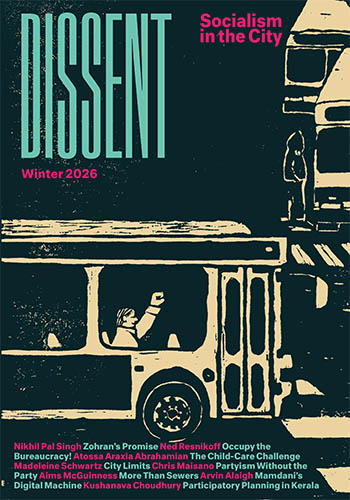
Zohran Mamdani’s successes and failures will shape how people around the country think about the viability of a socialist program, and whether socialists are capable of enacting it.

Wang Bing’s Youth is an epic work of people’s history writ small.

Rebuilding government decision-making power requires not just removing veto points, but also addressing the outsized corporate power that gives the wealthy the best access to policymakers.
The scale and depth of the attack on our institutions means that there is no simple way for a pro-democracy coalition to flip the lights back on after Trump. We need transformative thinking.

The intertwined relationship between liberalism and socialism offers important lessons for today’s fractious intra-left fights.
Turkey’s slide into authoritarianism was facilitated by collaborators, enablers, and an inept opposition.

Progressives will only make lasting progress with Latino voters if they examine not just why Trump was appealing, but also why the left was not.

Outclassed is a monument to the very elitism it seeks to challenge.
The Brazilian president once argued that democracy will founder where inequality reigns. Today, he sees fighting inequality as democracy’s animating mission.
How does labor organize at scale?

In cooperation with gangs and with massive popular support, Nayib Bukele is cracking down on dissidents and expanding the state’s carceral apparatus.
An interview with Adam Przeworski.

Does Morena’s success offer a blueprint for the left? An exchange.

If we dismiss concepts because of particular examples of misuse, we encourage the repression of discomforting histories and ideas.

Flesh and blood alone cannot halt the advance of iron and steel. To stop the tanks, we need people to place blocks on the road and throw sand into the gears.