Can Unions Strengthen Their Political Muscle?
Can Unions Strengthen Their Political Muscle?
Labor unions have long been central to the fight for democracy. But they can only play that role when members are engaged and trust their unions to fight for them.
As the Trump administration has attacked pillar after pillar of civil society, including unions, two puzzles for the labor movement have grown in importance: Why did so many union members vote for a documented union buster? And what can unions do to sustain member mobilization against that union buster’s increasingly authoritarian regime?
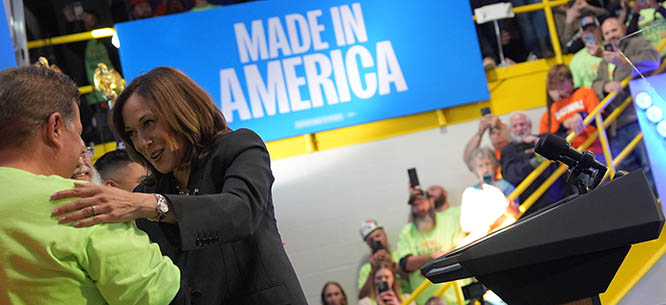
As scholars of labor and democracy, we’ve been studying these questions in ongoing surveys and interviews with union members and leaders. These questions are also personal to us, since one of us served in the Biden administration’s Department of Labor. The assumption in the administration was that being the “most pro-union president since FDR,” a claim the White House proudly repeated, was not just right economically and morally but also good politics. Major infrastructure investments with pro-worker labor standards, pro-worker appointments and decisions at the National Labor Relations Board, expansions of federal worker collective bargaining and organizing, and other measures would pull more union workers to support Biden, and later Kamala Harris, in the 2024 election.
According to our own recent analysis, union members were about eight points more likely to support Harris over Trump than non-members (other exit polls found similar margins). This is in line with many decades of survey research showing union members are more likely to vote for Democratic candidates, though in recent decades the union Democratic difference had diminished in size. Yet given the stakes of the election and the historic labor record of the Biden presidency, why wasn’t the union margin significantly larger? Unions will need to solve this puzzle if they want to strengthen their political muscle for the fight against authoritarianism.
A Failure to Communicate
Unions have often served as trusted sources of information about the economy and the forces shaping their members’ livelihoods. Labor-run newspapers and schools once reached millions of workers, while union political and economic education programs taught members how they would be affected by government policies. These programs were part of a dense union culture that nurtured members’ broader worldviews.
Many unions are simply not playing that role for members today.
Subscribe now to read the full article
Online Only
Print + Online
Already a subscriber? Log in: