The Demise of Conflict Studies
The Demise of Conflict Studies
An entire industry specializing in mediation, peacekeeping, disarmament, and transitional justice has become largely obsolete.
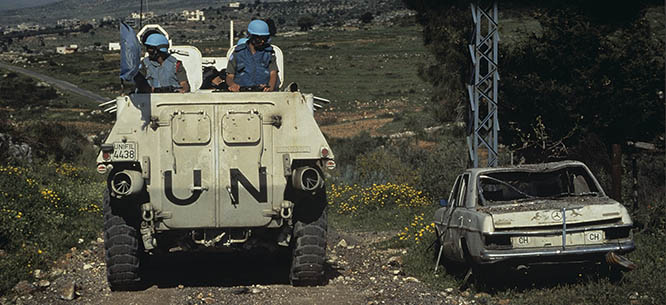
Ethiopia’s Tigray, Sudan, Gaza. In the 2020s, civil wars and counterinsurgencies have caused death and displacement on a scale not seen since the Cold War. Yet the academic field dedicated to studying such wars has never been less relevant to their resolution. Conflict studies is the child of a bygone era: a world in which Western scholars studied wars in faraway places, and Western states intervened in those same wars.
Just how closely the study of violent conflict was linked to the unique international moment that gave rise to it has only become clear since that moment passed. In a world where the UN rarely brokers settlements and Western states’ role in enforcing them is reduced to the Trump administration’s performative antics, who needs to understand how civil wars end or how armed groups behave? An entire industry specializing in mediation, peacekeeping, disarmament, or transitional justice has become largely obsolete. As the sway of Western armies and international organizations has diminished across war zones worldwide, researchers have found that their ground access is increasingly restricted, and the demand for their output is drastically receding.
But the crisis of conflict studies runs deeper. For three decades, its proponents generally assumed that Western governments were actors with the power to effect change for the better—at times misguided, but fundamentally well-intentioned. Brutal counterterrorism interventions, indifference to mass atrocities in Syria and Yemen, and hardening asylum policies gradually eroded this minimal consensus. Then came Gaza: an unprecedented shock to scholars’ widespread belief that policymakers shared their values. Worse, instead of speaking out as other disciplines did, the field morally collapsed from within, by remaining overwhelmingly silent in the face of Western-backed mass killing in Gaza. What, then, was conflict studies for? And what can its travails tell us about how wars have changed?
Conflict studies in its current form—a field exploring the drivers and the outcomes of civil wars and political violence by drawing, often comparatively, on country-level analysis—was born in the 1990s. During the Cold War, insurgencies had been studied by sociologists of revolutions and by theorists of social movements and anticolonial struggles. But mainstream political science and security studies were preoccupied with competition between superpowers and the threat of nuclear war. Civil wars were a marginal topic. With the end of the Cold War, studies of civil wars suddenly proliferated, receiving growing attention from Western publics. The prevalent sentiment was that “much of the underdeveloped world” was witnessing “the withering away of central governments, the rise of tribal and regional domains, the unchecked spread of disease, and the growing pervasiveness of war,” as the pundit Robert D. Kaplan put it in 1994. The following year, a group of Western politicians, humanitarians, and think tankers alarmed by “an explosion in the number of crises in the world” created the International Crisis Group, seeking to harness research to prevent conflict across the globe.
Yet the perception of an abrupt surge of civil wars was not borne out by the facts. The demise of the Eastern Bloc did have far-reaching, destabilizing ripple effects, from conflicts in former Soviet republics and the violent dissolution of Yugoslavia to the collapse of regimes in countries that were suddenly deprived of Soviet or U.S. aid, like Afghanistan and Somalia. But the passing of the Cold War also spelled the end of proxy wars between the superpowers. The number of civil wars actually peaked in 1991 and declined throughout the following decade. And with the notable and horrific exception of the genocide in Rwanda in 1994, such wars were not becoming deadlier.
During this period, the UN and the Western states—what was then called the “international community”—mediated peace agreements that ended decade-long wars in Cambodia, El Salvador, and elsewhere. UN peacekeeping missions more than doubled between 1988 and 1994, and their head count increased sevenfold. The gravitational pull of humanitarian interventions and state-building operations was essential to the growth of conflict studies. Questions of whether and how to intervene prompted fervent debates, whose protagonists became public figures. Participants and close observers of these interventions subsequently produced textbooks and articles. A body of work emerged that examined the conditions under which multilateral peace operations were likely to succeed or fail.
A major theme throughout the 1990s was so-called ethnic conflict. Western academics were at pains to present rational explanations for what the media often portrayed as atavistic, irrational hatreds. A leading voice was Mary Kaldor, a British political scientist and peace activist who returned from visits to the Balkans and the Caucasus with the idea that the conflicts of the post–Cold War era were categorically different from earlier ones. According to Kaldor, “new wars” were about identity politics and plunder rather than ideology: they were “a kind of mixture between wars . . . massive violations of human rights . . . and organized crime.”
Kaldor’s argument was symptomatic of the field’s widespread tendency to adopt a condescending, reprobatory attitude toward the causes non-Western belligerents were fighting for. This view was even more blatant in the hugely influential econometric analyses of Paul Collier and Anke Hoeffler. The two scholars portrayed rebels as motivated above all by greed, not politics. Conflicts were the result of non-state actors cynically weighing the costs and benefits of going to war; Collier and Hoeffler simply ignored the possible role of governments in initiating violence. The argument was not of mere academic interest: Collier headed the World Bank’s research department at the time, and the policy recommendations he and Hoeffler drew from their analysis reinforced incumbent governments as well as the bank’s own prescriptions for market liberalization.
In the academy, Collier and Hoeffler’s papers unleashed a torrent of regression analyses linking the risk of civil war to everything from poverty to the presence of mountains or forests. That body of work took the field’s distance from its object of study to an extreme. Up-and-coming scholars wishing to contribute did not even need to have ever visited a country at war; it was enough to crunch numbers from a U.S. campus. Still, even as such perspectives became dominant, they were fiercely contested, particularly by scholars who drew on field research.
Conflict studies grew with the rapidly expanding scope of peace operations. By the late 1990s, justifications for intervention were taking on messianic tones. Proponents of the “Responsibility to Protect” bestowed upon Western governments the duty to save poor countries from barbaric wars. From Bosnia to East Timor, interventions turned to social engineering: transitional justice, security sector reform, constitutional design in divided societies, and nation-building. Every aspect of these operations spawned entire sub-literatures.
The onset of the War on Terror further illustrated how closely developments in the field were linked to Western policies. Interventionism received a boost that went far beyond Afghanistan and Iraq. Policymakers scanned what they labeled “weak” or “failed” states from which the next attack might emerge. Faraway conflicts that once might have been seen as mere humanitarian problems became potential national security threats, and development assistance became heavily securitized as a result. Some (typically Muslim) communities across the globe were seen as prone to violent extremism and in need of special attention.
As Western states shifted from peacekeeping and humanitarian interventions toward counterinsurgency, the field followed. Scholars began seeking to understand insurgents’ success in winning popular support and the effects of state repression. This scholarship was highly diverse, much of it written from a critical vantage point, often pointing to the counterproductive consequences of Western interventions and questioning their underlying assumptions. Even so, the quest for policy relevance shaped the field as a whole, even on its fringes.
We were part of this intellectual drive in our relatively specialized areas (conflict dynamics in Libya and the Sahel, respectively). In the shadow of revered figures in our field, there was room to further our understanding of the places we had chosen to study before they received much international attention, to join fascinating comparative discussions with scholars working in other regions, and to share our research in prestigious policy circles. Our employers were thrilled to use our work to claim “research impact.” Powerful people seemed keen to hear the views of a plethora of professionals: researchers, investigative journalists, humanitarians, mediators, civil society representatives from both the Global North and South, and human rights activists were all offered a say in these debates, making it seem as if foreign policy choices were the products of a value-driven, knowledge-based industry.
From a strict scholarly perspective, the pushback against the unsophisticated approaches to violent conflicts developed by Collier and Hoeffler and Kaldor generated lively academic conversations. Researchers began considering political violence as a phenomenon in itself, rather than merely a higher “temperature of conflict”—a theoretical breakthrough that paved the way for new scholarship. Analytical tools were developed to unpack insurgent behaviors from every possible angle: the nature of their violence, their governance systems, their transnational connections, their ability to remain united or propensity to fragment, their competition with rivals, their transformations over time. We felt like detectives solving topical puzzles: why are insurgents looting here but not there? Why is this group engaging in sexual violence while the other is not? Through granular, context-specific analysis, we could transcend the gross generalizations and probabilistic models of our predecessors and help establish the causes of political violence. And there was money available to pursue our research agendas.
Perhaps the most intriguing aspect of our conversations with policymakers in Paris, Brussels, Berlin, London, and Washington was that they did not necessarily need to be polite. Our expert advocacy against one-size-fits-all solutions in countries subjected to Western interventionism could take the form of confrontational critiques without necessarily putting an end to the exchange.
We were not totally naive. We questioned the kind of knowledge we were producing. We were awkwardly placed between the policy world and the societies we were studying, which were not our own. We recognized that our presence at high-level meetings in the Global North was often just a box-ticking exercise that did not imply much concern for the substance of our messages. International policy conferences—or at least the public plenary sessions—were theaters where generals in charge of counterinsurgency operations would say that military campaigns depended on the cooperation of local populations, and where scholars and activists would warn against the dangers of state-sponsored militias or illiberal EU migration policies and receive an approving nod in return.
Even in places where participants shared genuine reciprocal interest, we learned that real foreign policy decisions were made elsewhere, at echelons far above us and the cheerful bureaucrats we talked to, and according to rationales that had little to do with the knowledge exchange we were part of. President Emmanuel Macron’s choice to continue the French intervention in the Sahel he had inherited from his predecessor on taking office in 2017 was a perfect example of decision-making secluded from the inputs of diplomats and civil servants from the French Ministry for Europe and Foreign Affairs. Macron unnecessarily prolonged the French military presence and committed countless, easily preventable patronizing diplomatic blunders. Still, opportunities for sharing research findings with policymakers abounded. The assumption that such exchanges could eventually trickle up and influence decision-making was central to the development of conflict studies. That assumption unraveled quickly.
Just as conflict studies came into full bloom, a widespread disillusionment took hold in the West regarding the lofty ambitions of worldwide interventionism. The failure of externally imposed state-building in Afghanistan and Iraq mired militaries in endless wars, right up to the chaotic withdrawal from Kabul in 2021. Bloated multidimensional UN missions at best froze conflicts and often did not even achieve that. Intervention at arm’s length became the new favored model. Under Obama, the United States preferred conducting drone strikes to sending troops and backed Kurdish forces to fight the Islamic State. Europeans, meanwhile, paid African states to undertake some of the riskiest peacekeeping tasks in Mali and Somalia. Proponents of this approach were triumphant when the NATO-led air campaign in 2011 in Libya encountered swift success in toppling Muammar Qaddafi. But Libya’s subsequent descent into chaos left that model discredited too.
Western states were also simply running out of opportunities to get involved in crises in the Global South. Worsening relations with Russia after the start of the war in Ukraine in 2014 paralyzed the UN Security Council, disrupting longstanding patterns of multilateral conflict management. Both Russia and Middle Eastern powers, rattled by the 2011 uprisings, began intervening in regional conflicts.
In August 2014, an obscure event signaled the start of a new era: the United Arab Emirates covertly sent fighter jets to bomb local militias in Libya’s civil war. Though ostensibly a U.S. ally, the UAE had not so much as informed the Americans about its intervention on another continent. Over the following years, UAE and Egyptian support for the Libyan warlord Khalifa Haftar persistently thwarted UN-led and Western-backed efforts to broker a political settlement. This was followed by Russia’s intervention in Syria in 2015 and the Wagner Group’s adventurous forays into Sudan in 2017 and the Central African Republic in 2018. Soon, Russian, Emirati, and Turkish interventions multiplied across Africa.
Meanwhile, Western states’ humanitarian posture toward wars in the South changed quickly. As Bashar al-Assad and his foreign supporters killed hundreds of thousands in Syria, Western priorities in the country shifted toward counterterrorism and containing refugee flows. U.S.-backed offensives to capture Mosul and Raqqa from the Islamic State wreaked an unprecedented level of urban destruction, mirroring the results of Russia’s bombing of Aleppo. In Yemen, the United States and United Kingdom supplied weapons to a coalition led by Saudi Arabia that bombed hospitals and water infrastructure and used starvation as a weapon of war. Western commitment to the so-called rules-based order had always been subject to the caveats of realpolitik, but even the pretense of such an order became increasingly difficult to maintain.
The last bastion of Western interventionism was in the Sahel, where France led a quixotic quest to prop up weak governments against mounting jihadist insurgencies through a “holistic” stabilization package and UN and EU peacekeeping missions. From 2020 onward, a series of military coups toppled those governments. In one country after another, the putschists expelled the French as well as the peacekeepers, while turning to Russian military instructors and Turkish weaponry for support. Further to the east, in Sudan, Western states looked on as the UAE, Egypt, Turkey, Iran, and Russia backed opposing sides in the civil war. Neither the United States nor Europe considered the world’s largest displacement crisis to be worth straining relations with allies such as the UAE. The days of UN-brokered settlements and Western-backed stabilization efforts were gone, while atrocities against civilians were on the rise again.
Conflict studies absorbed the new zeitgeist haltingly and reluctantly. We ourselves encountered it in interlocutors from Western policy circles who began expressing support for the ruthless methods employed by the newly interventionist non-Western powers. This was a time when Macron described Russia as a partner in fighting “Islamist terrorism.” Off the record, some European military officials would lament Western reluctance to deliver what Sahelian armies wanted (and found with their new Russian partners): lethal equipment and ammunition, with no human rights strings attached. For two decades, a consensus held among both political scientists and military strategists that winning hearts and minds was key to counterinsurgency, and that indiscriminate violence was counterproductive. That consensus broke down, including in conflict studies itself. Looking back at Russia’s war in Chechnya and Western-backed counterinsurgencies in the Cold War, some scholars began arguing that using brute force against civilians could work.
Disagreements at meetings with officials could take a nasty turn, and we saw the intrusion of arguments alien to the world we thought we were jointly inhabiting, including far-right fantasies like the Great Replacement Theory. Pervasive anti-intellectualism in the political class sometimes transformed occasions to exchange ideas into wasteful, absurd dialogues, as one of us experienced during an official online hearing where a French MP, who joined while driving her car, seemed to manifest disinterest and disdain for the not particularly controversial claims we made. It was hard not to see this awkward moment as the symptom of a sea change. A gap had opened between our intellectual community and the institutions that helped establish it.
The erosion of the liberal interventionist order also meant researchers had rapidly shrinking access to conflict zones. Field research had disproportionately focused on conflicts with a large Western presence. This was partly driven by public interest. Consultancy jobs for organizations associated in one way or another with interventions offered a way of getting access and funding. Even where no such direct link existed, researchers often managed to hop on UN flights to get to remote places. Western states’ influence and close relationships with local authorities also furnished us with a degree of protection: security services were typically cautious in how they dealt with nosy foreigners.
As that order broke down, many war zones became no-go areas. The infrastructure of multilateral interventionism receded. Jihadist insurgencies expanded. Places where the Wagner Group became the new foreign security provider, or where the UAE armed local militias, were hostile environments for field research. Even authoritarian states that were considered Western allies showed growing assertiveness in their contempt for scholars from the North. Egypt’s security services allegedly tortured and killed the Italian doctoral student Giulio Regeni in 2016; the UAE held a British doctoral student for several months in 2018 on espionage charges. Meanwhile, universities introduced increasingly rigid bureaucratic processes to decide whether scholars could conduct research in risky settings.
Our discipline responded by outsourcing data collection in the field to local researchers—even though they often faced greater risks than their Western colleagues and, as subcontractors, did not enjoy the same duty of care as the employees of research institutions—or by using technologies for research from afar, like social media analysis or remote sensing. But these techniques, even when creative and meaningful, could hardly compensate for the inability to immerse oneself in a society living through war. They turned the people at the center of conflicts into figures on a spreadsheet. In a post-Western world, an essentially Western social science discipline was rapidly losing depth.
Such haphazard adaptation aside, conflict studies carried on largely as before, tackling many of the same questions, with little comment on the decay of the international order that had birthed it. This was also the field’s response when faced with the hitherto biggest challenge to the worldview that underpinned it. This time, the challenge came not from newly interventionist authoritarian powers, but from within the West itself, in the form of Western governments’ support for Israel’s genocidal campaign in Gaza.
The call to prevent mass atrocities, which was foundational to the emergence of conflict studies in the 1990s, assumed a clear distribution of roles. The villains were warlords in the former Yugoslavia, African and Middle Eastern dictators, or bearded, fanatical terrorists. Western governments were there to end or prevent the massacres—even if they were often sluggish and needed to be jolted into action. Now, these same governments backed Israel’s war of annihilation while pretending that nothing had changed. Nobody personified this role switch better than Samantha Power, who had been among the International Crisis Group’s first analysts and subsequently emerged as a leading proponent of the Responsibility to Protect. Even then, critics had decried Power’s tendency to lambast U.S. inaction over mass killing by foreign states, while ignoring cases where the United States had actively aided or perpetrated atrocities. Such hypocrisy now became glaringly obvious when, as the Biden administration’s head of USAID, Power publicly defended her government as “the single largest provider of aid to the Palestinian people” even as it was funding and arming Israel’s destruction of the Gaza Strip.
Blatant normative double standards by Western leaders should not necessarily have come as a surprise, given an increasingly illiberal and overtly racist political climate in the EU and North America. More shocking to us, even if less consequential globally, was the deafening silence of our discipline about Gaza. With a few exceptions, the field’s most prominent scholars have remained mute. This is a marked departure from how the same luminaries engaged with previous wars of major public concern, such as the U.S. War on Terror or Russia’s invasion of Ukraine. After losing touch with one of their primary institutional audiences, conflict studies scholars are now losing touch with their core professional ethics.
Since the beginning of the war in Gaza, cancellations, dismissals, and defamation have been effective in repressing criticism of Israel at universities and encouraging self-censorship, especially in the United States and Germany. Conflict studies, however, has remained conspicuously quiet in contrast with two adjacent disciplines where debates are raging: genocide studies and international law. In genocide studies, a group of scholars have denounced what they see as their colleagues’ silence, declaring their discipline to be futile after failing to see Gaza for what it was. Scholars of international law have recognized Gaza as a fatal blow to their discipline’s raison d’être, while mocking their own tendency to carry on unperturbed (“there is always another conference to attend”). Nevertheless, in both fields, many leading voices did speak out to try to shape public discourse and to grapple with the unsettling implications for their respective academic areas. In conflict studies, by contrast, the rare attempts to do so have been made by relatively junior scholars, with others—including ourselves—resorting to social media to make their consternation known individually.
Intimidation and career considerations, therefore, cannot by themselves explain the silence in conflict studies. That silence also appears to reflect the discipline’s ingrained worldview, in which mass atrocities are committed by bad people in faraway places—not by, and with the full support of, liberal democracies. Abandoning that worldview would call into question the field’s relation to policy and, ultimately, its overall purpose. It is already profoundly undermining our credibility in the field: why study atrocities in Africa but not in Gaza? And it would raise a question that now haunts us: Was our work just a prop for advancing Western hegemony? Was conflict studies, even if inadvertently, an imperial science?
What happens next for conflict studies is somewhat moot. Our space is shrinking. Academic jobs and research funding are vanishing, and so is the demand for fine-grained country-level expertise in policy circles. Many of us will not survive professionally. Some will recalibrate research agendas to meet the policy priorities of the day. They will focus on great power competition, hybrid threats, and the changing nature of warfare between technologically advanced armies, while processing large datasets of material harvested online with AI tools. Others will retreat into the ivory tower. Ultimately, those still cherishing the study of bumpy social dynamics and the idea that “a theory of war must be sourced from where it is lived and not from worlds far removed from the action,” as the anthropologist Munira Khayyat recently wrote in a remarkable study of southern Lebanon, will have to think hard about how to salvage their relevance.
Assuming autonomy from bigoted policy circles appears imperative, but comes quite literally at a high cost. Those hoping to make an impact on policy may have to accept that whispering in the ears of diplomats no longer offers a valuable way of doing so—if it ever did. The logical conclusion would be to spend more time cultivating informed, progressive agendas with wider audiences. But this involves challenges that go way beyond the need to use engaging research dissemination formats. It means pushing into an increasingly embattled public discourse, an informational space already saturated with domestic crises and culture wars. That environment forces not only conflict studies, but also the social sciences more broadly, to reflect on how to survive and make meaningful contributions to public debates.
Wolfram Lacher is a senior associate at the German Institute for International and Security Affairs (SWP) in Berlin and the author of Libya’s Fragmentation: Structure and Process in Violent Conflict.
Yvan Guichaoua is a senior researcher at the Bonn International Centre for Conflict Studies. He is currently co-director of the research program GovJihad, which investigates how transnational jihadist groups establish governance systems in Africa.